
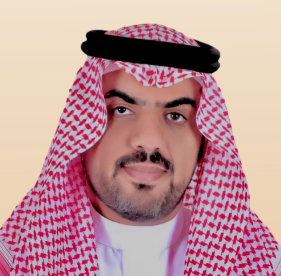
Dr. Saleh bin Ali Al-Aqla
President of the Islamic University
Leadership Overview
- This leadership path unfolds within the practical commitment to Saudi Vision 2030, which aims to build an ambitious nation, a prosperous economy, and a vibrant society through developing education, governance, and innovation, while strengthening the Kingdom’s position as a leading center for knowledge, science, and cultural openness.
- Dr. Al-Aqla is a national leader in the fields of education, governance, and finance, dedicating his career to serving his country and its leadership. He currently serves as President of the Islamic University of Madinah since May 2024, leading efforts to develop the university into a global center of excellence in Islamic and interdisciplinary studies, in alignment with the goals of Saudi Vision 2030.
- He graduated from Durham University in the United Kingdom with a PhD in Corporate Governance, and from Harvard University in the USA after completing the Program for Leadership Development (PLD). He also holds the Chartered Financial Analyst (CFA) designation. He has held senior leadership positions at the General Court of Audit, higher education institutions, and advisory bodies, reinforcing his role as a bridge between public policy and executive performance.
- Throughout his career, he has been distinguished by a leadership vision based on digital transformation, institutionalizing governance principles, and achieving spending efficiency. He oversaw pioneering national projects such as the establishment of the “Shamil” system for nationwide electronic auditing, and managing the Saudi Center for Financial Audit and Performance Oversight. He also founded and led the College of Economics and Islamic Finance at Umm Al-Qura University to become a leading center for qualifying national competencies in Islamic economics and finance.
- He holds several high-level supervisory and advisory positions, including memberships on boards of trustees of local and international universities, and chairing investment and digital transformation committees. He also chairs the Board of Directors of Al-Saqifa Business Development Company, reflecting his ability to integrate academic, administrative, and economic work.
- His leadership philosophy centers on building a knowledge economy, developing national and international competencies, and enhancing transparency and accountability in the public and private sectors. He pays special attention to spreading the values of tolerance, coexistence, and openness, inspired by the Kingdom’s leading role in promoting moderate discourse and enabling higher education institutions to carry out their intellectual and cultural mission locally and globally, in line with the pillars of Vision 2030.
- He believes that innovation in higher education and the integration of institutional roles are the keys to future leadership. He moves forward with a firm national vision to build a leadership generation that contributes to the sustainability of the Kingdom’s renaissance and the achievement of its future goals. His vision is founded on authentic leadership values: institutional commitment, serving the national interest, human development, and empowerment through knowledge.
Academic Qualifications
PhD in Accounting and Finance
Durham University, UK
Master’s in Accounting
King Abdulaziz University
Bachelor’s in Accounting
Umm Al-Qura University
Professional Certifications
Chartered Financial Analyst (CFA) Charter
CFA Institute
Program for Leadership Development (PLD)
Harvard University, USA
Certificate in Management Excellence (CME)
Harvard University, USA
Executive Career Path
Vice Dean of E-Learning and Distance Education
Umm Al-Qura University
Founder and Dean, College of Economics and Islamic Finance
Umm Al-Qura University
Advisor to the President of the General Court of Audit
General Court of Audit
Vice Chairman, Board of Directors of Wadi Makkah Real Estate Company
Founder and General Supervisor of the “Shamil” Electronic Auditing System
President of the Saudi Center for Financial Audit and Performance Oversight
General Court of Audit
Chairman, Board of Directors of Al-Saqifa Business Development Company
President of the Islamic University of Madinah
Leadership Competencies
- His leadership competencies are strengthened by a unique integration of academic, professional, and leadership qualifications. He holds a PhD in Accounting and Finance, with his thesis and research focused on corporate governance, providing a deep scientific foundation in understanding institutional and oversight systems. Added to this is his CFA charter, which equipped him with advanced skills in analysis, valuation, management, institutional governance, and understanding of global markets. This certification also enhanced his ability to make strategic financial decisions based on high professional standards. In addition, he benefited from international leadership training at Harvard University through the PLD program, granting him a global strategic vision in change management and institutional development. This diversity enabled him to successfully lead academic and governmental institutions, and acquire exceptional interpersonal skills such as balanced analytical thinking and the ability to integrate academic vision with practical execution.
- He possesses extensive leadership experience that enables him to guide institutions towards achieving organizational excellence and performance sustainability. He demonstrates high proficiency in strategic leadership and digital transformation through adopting forward-looking visions and launching technological projects that enhanced institutional efficiency. He contributed to the establishment and development of national digital platforms that played a pivotal role in improving governmental work environments.
- His ability to enhance transparency and accountability is evident in a career rich with effective financial governance applications, as he contributed to formulating advanced oversight models that boosted trust in public institutions. He also has a distinct analytical ability to read public, economic, and financial indicators and use them as effective guiding tools in planning and decision-making, reflected in the quality of the policies and strategies he oversaw.
- In the context of human resource management, he adopts an empowering style in leading teams and developing emerging leaders, believing in the importance of building human capabilities to achieve institutional goals. He is also distinguished by his continuous enthusiasm for developing higher education through embracing innovation and establishing flexible, knowledge-based university environments, which contributed to raising the competitiveness of the universities he worked with. He is a supporter of integrating national efforts through building effective partnerships with government entities, the private sector, and international organizations, maximizing impact and achieving projects with both local and global resonance.